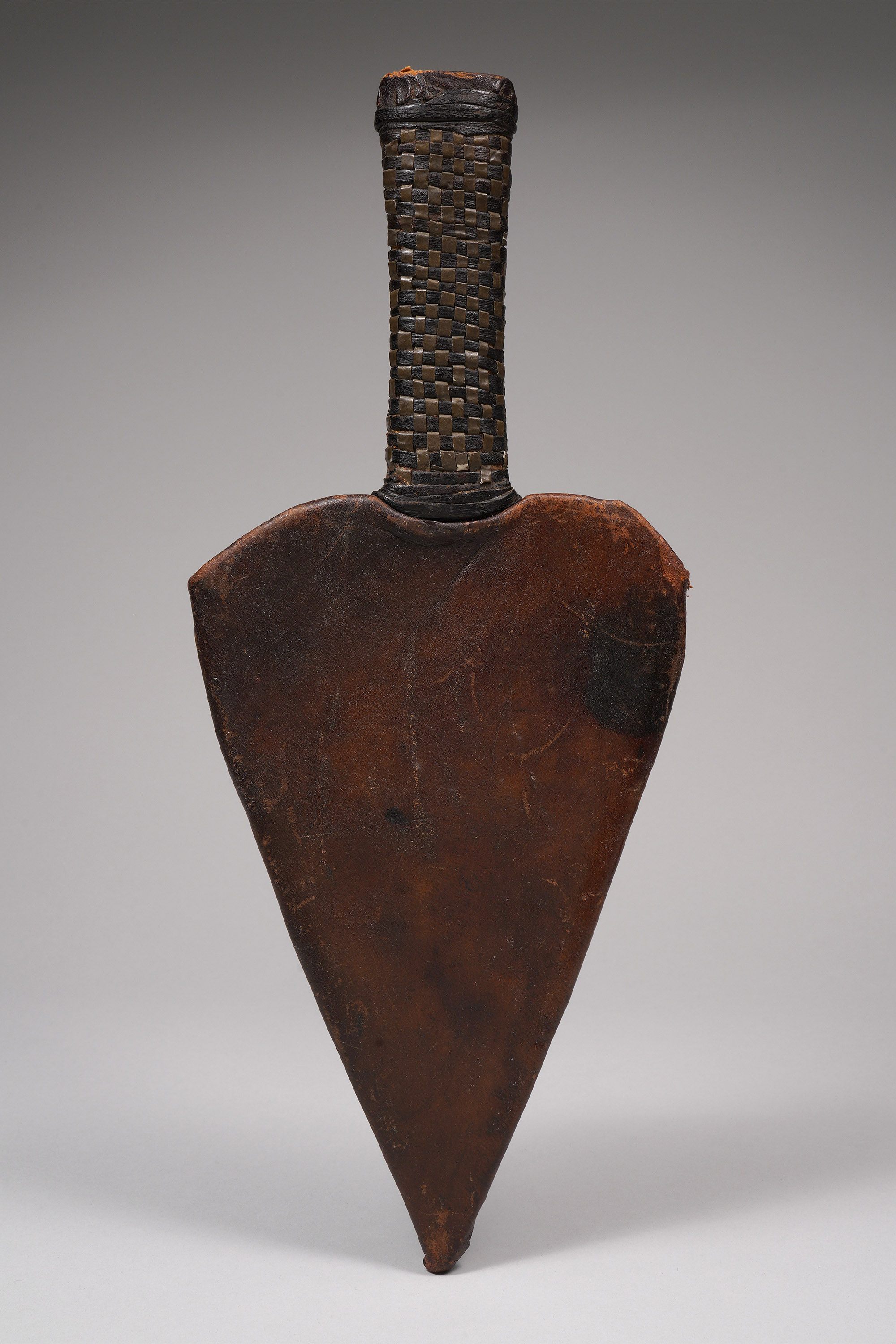
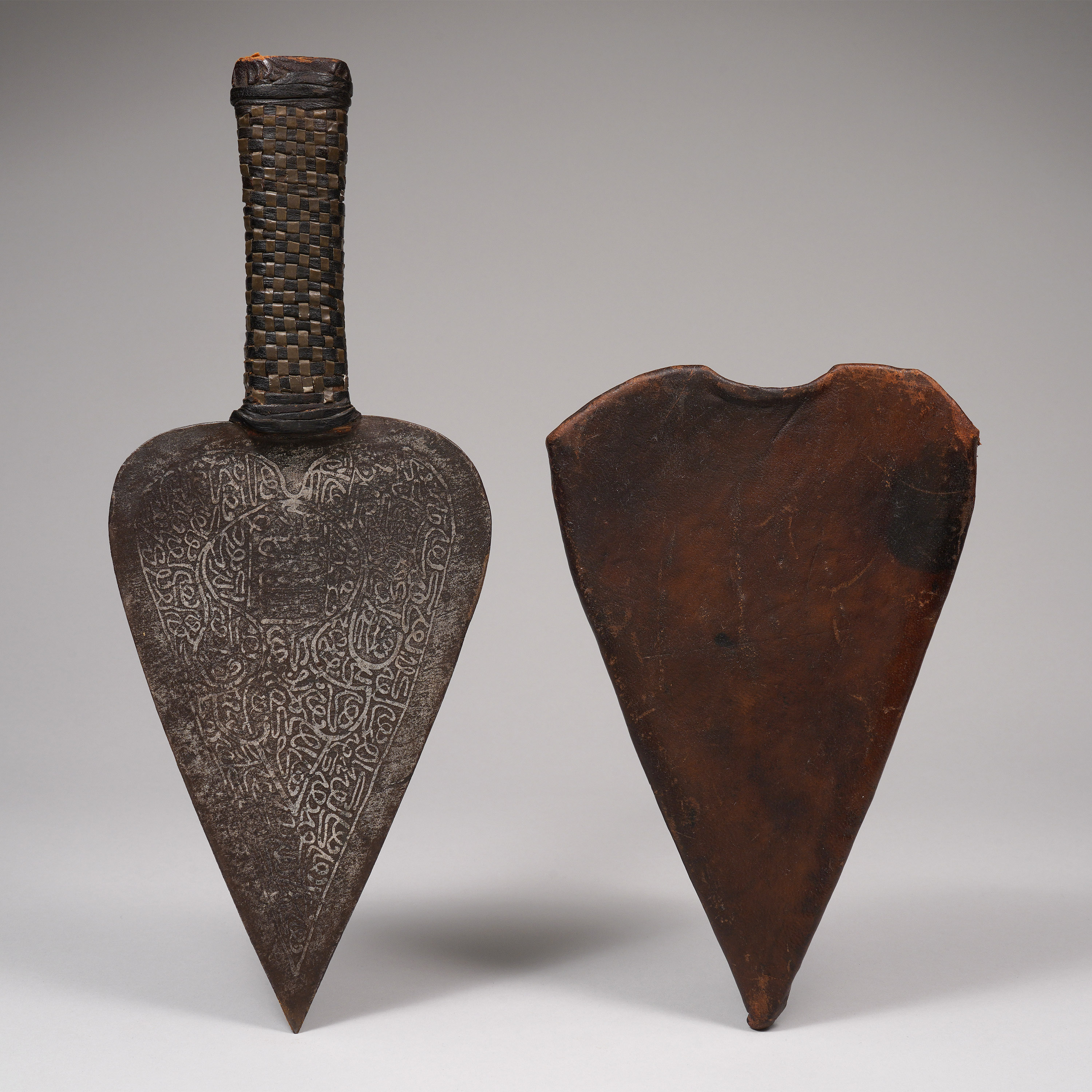
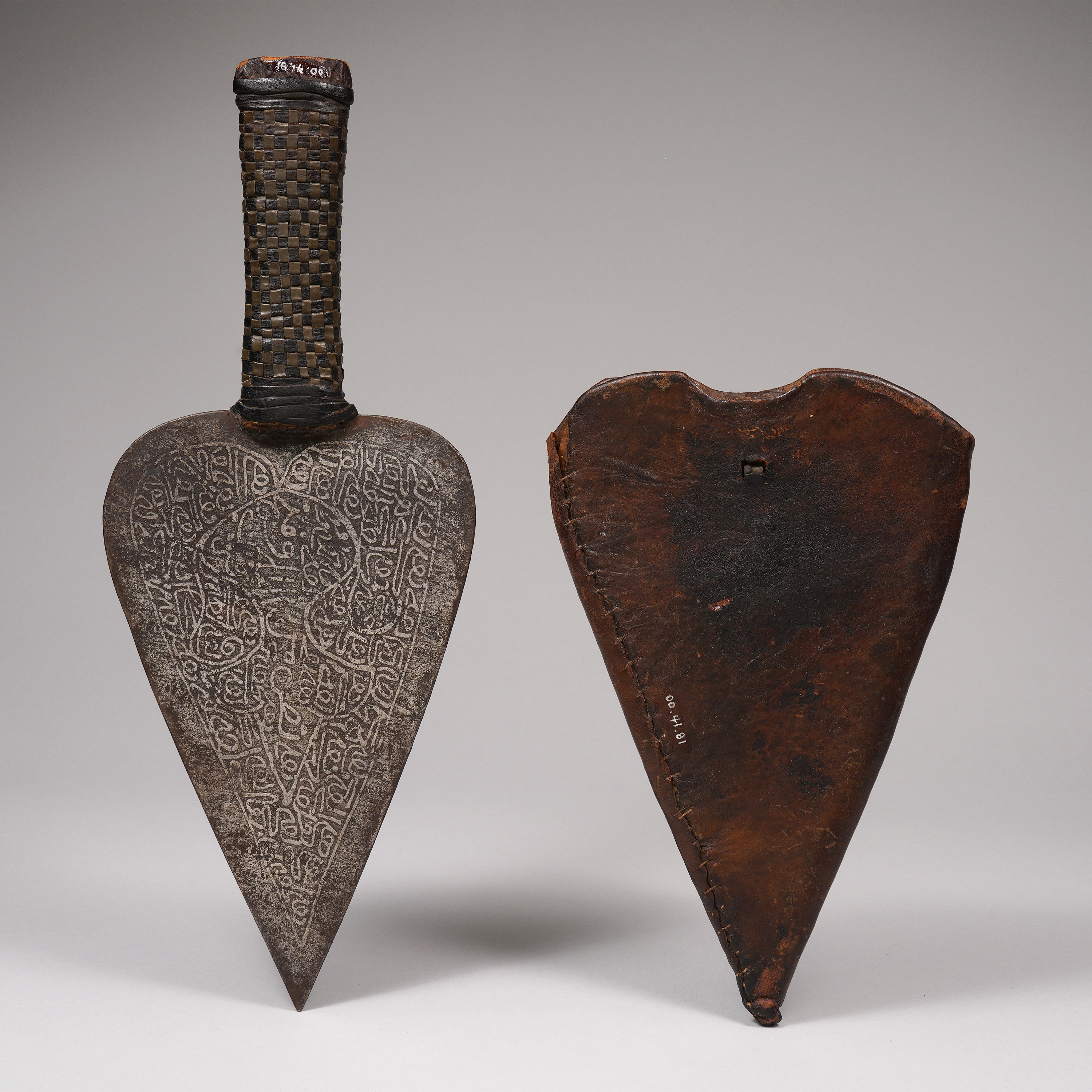
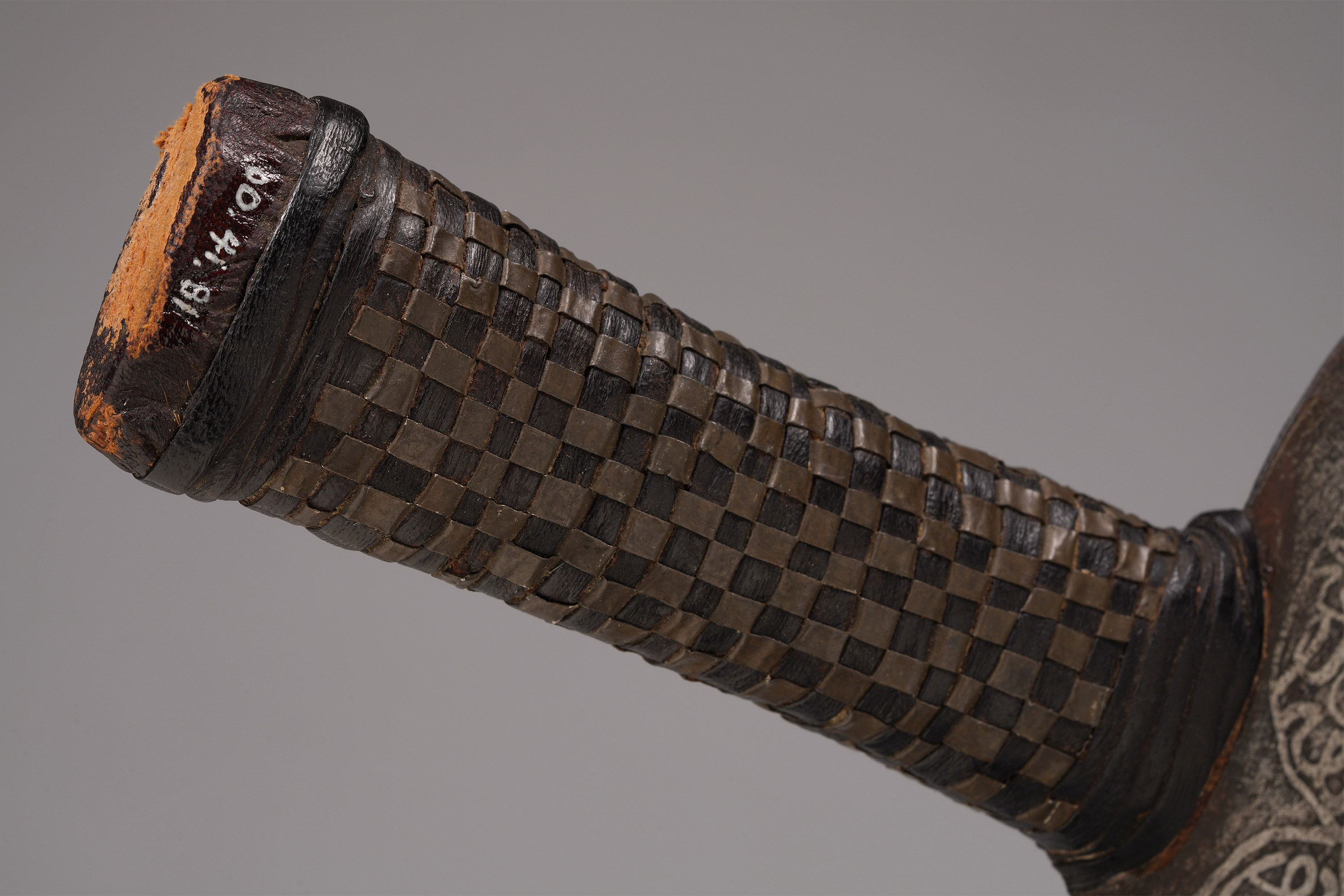
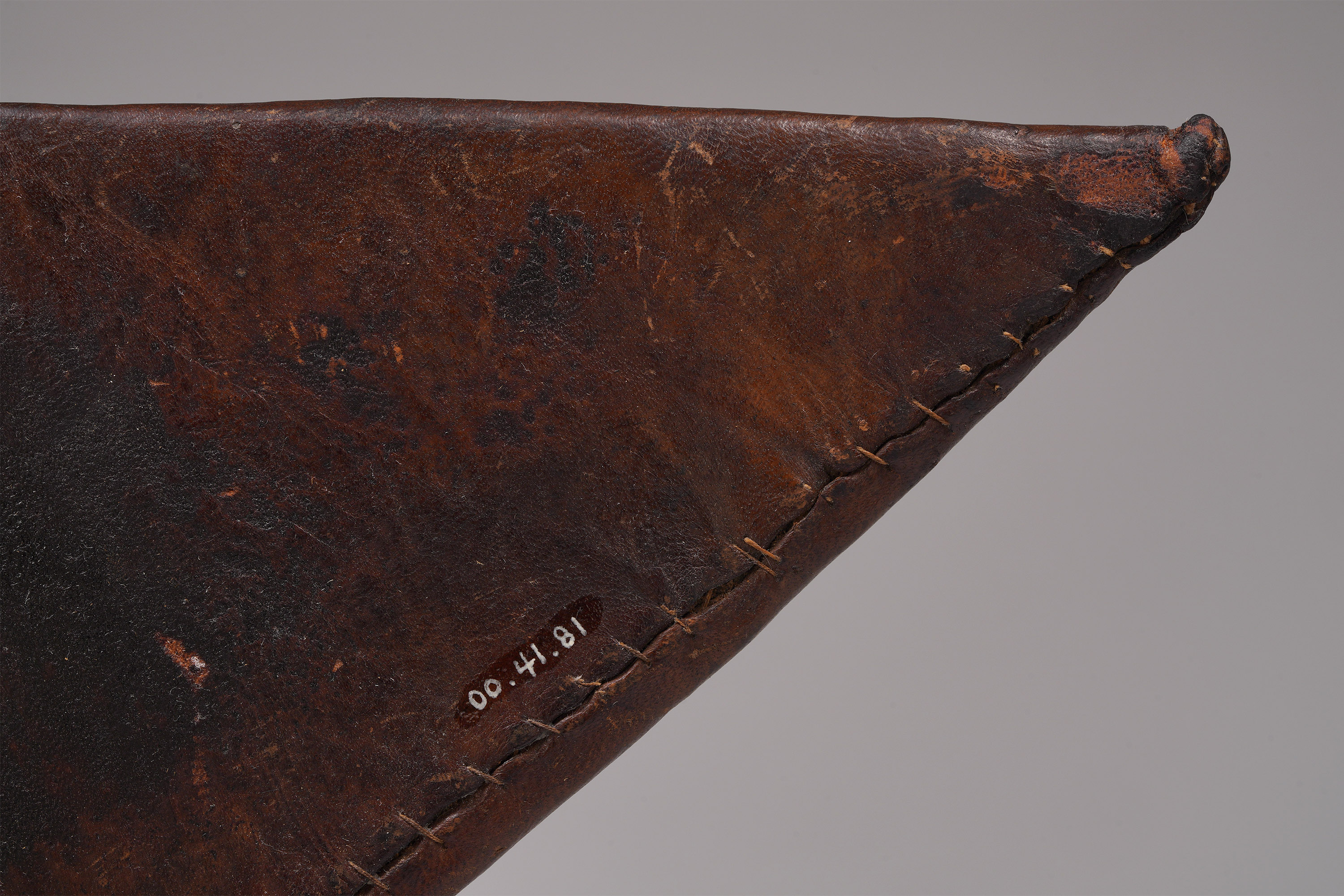
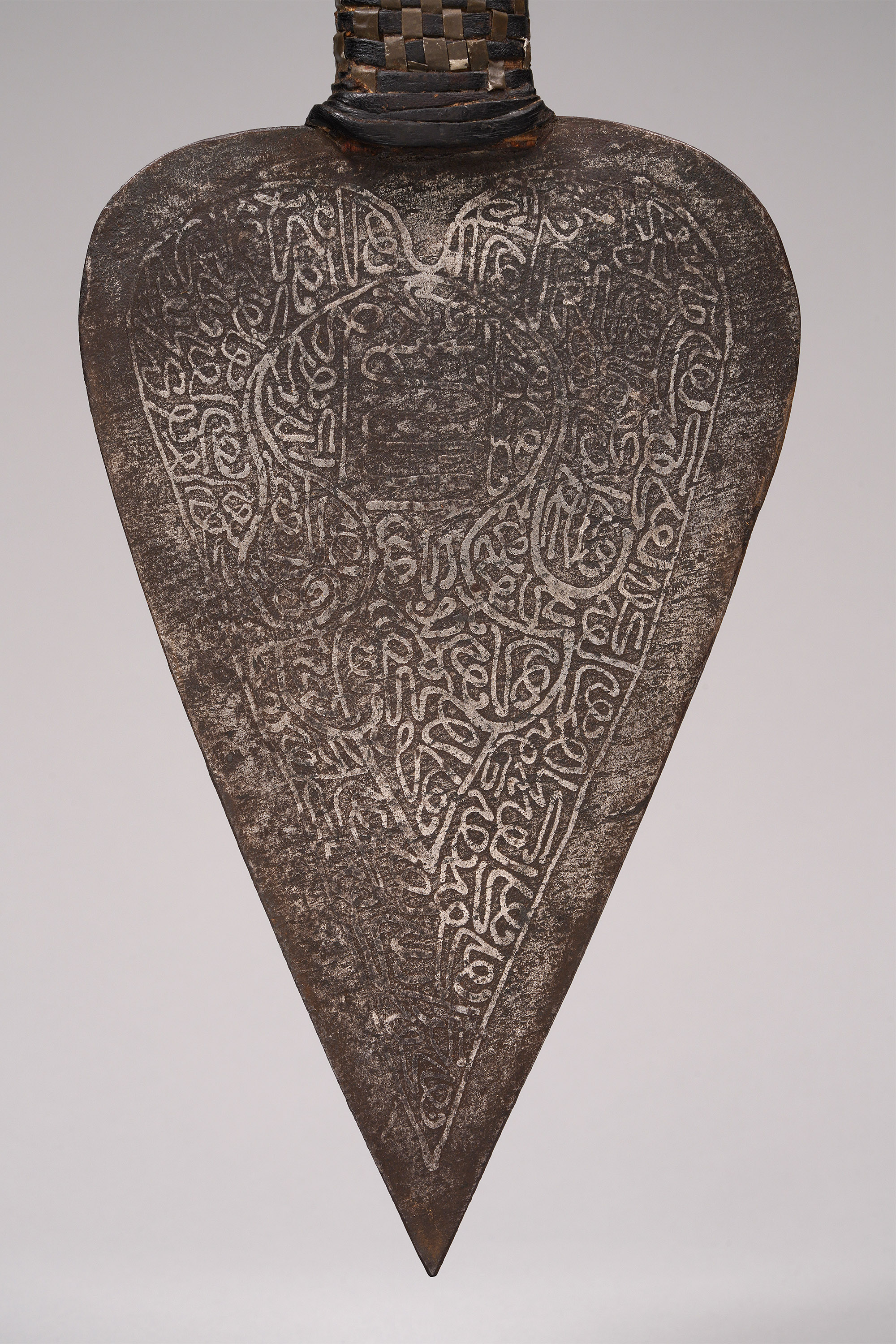
Short Sword with Thuluth Etching and Leather Sheath
Mahdist, Sudan (Omdurman)
Iron, wood, leather, lead
Late 19th century
Sudan was governed by foreign powers for most of the nineteenth century – first by Egypt in 1822 and then by Great Britain in 1873. The hardship experienced by the Sudanese population during this time produced widespread support for Muhammed Ibn Ahmad, who promised liberation alongside a renewal of faith. In 1881, Ahmad was proclaimed “the Mahdi” – the messiah and revolutionary leader – and he would go on to lead his Mahdist followers to military victories and the establishment of a vast Islamic state. The Mahdist regime came to an end after a defeat by the British at the Battle of Omdurman in 1898, and Sudan was again placed under British and Egyptian control until 1956.
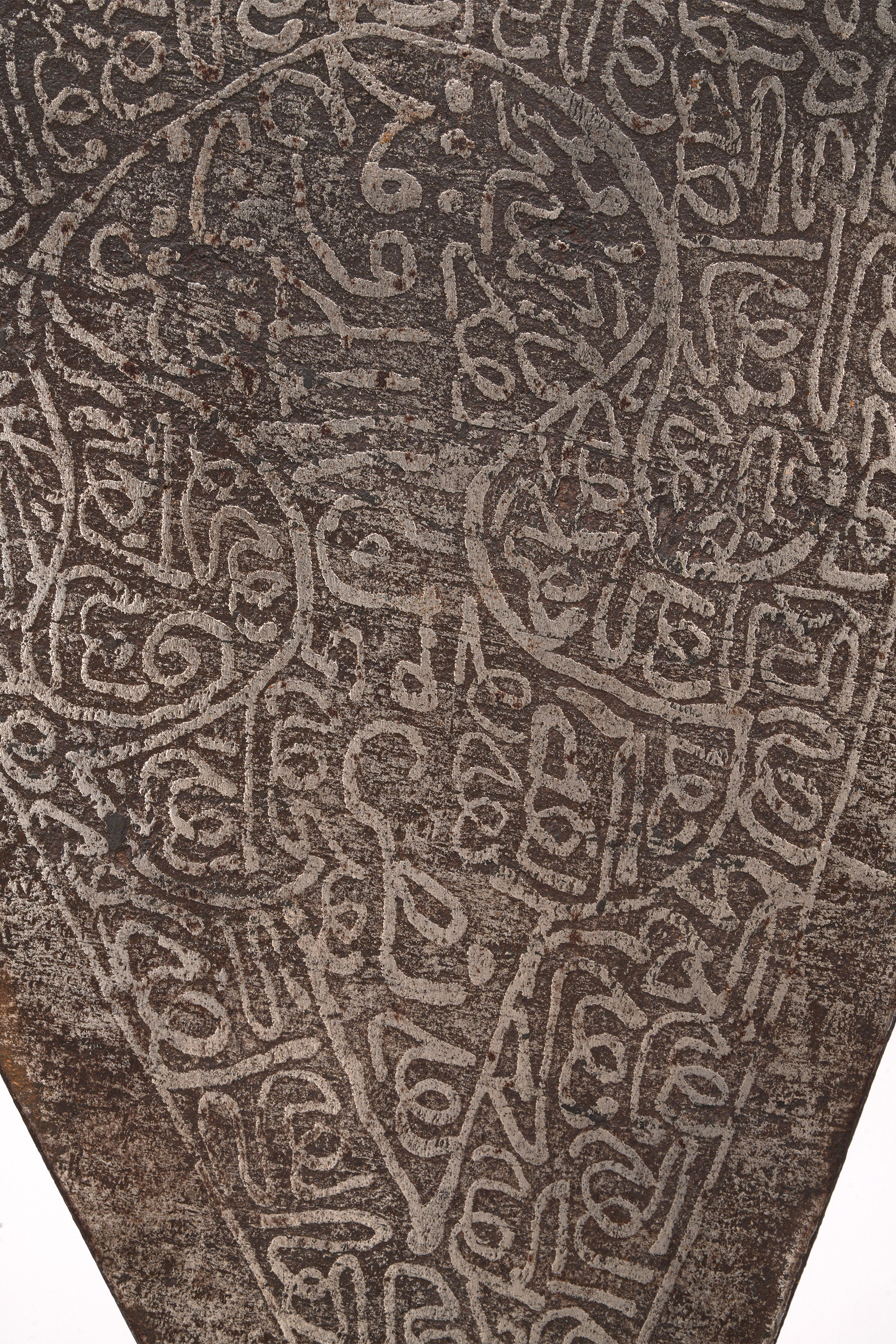
Like many Mahdist blades, this piece is covered with acid-etched Arabic script known as thuluth, in which exhortations to the faithful from the Koran are written. Sometimes, thuluth script also included personal messages from the artisan, praising the person for whom the knife was made (Spring, African Arms and Armor, 1993; Tirri, Islamic and Native Weapons of Colonial Africa, 2007; Westerdijk, The African Throwing Knife, 1988).
This piece was deaccessioned from the Old Dartmouth Historical Society Museum in New Bedford, Massachusetts, inventory number 00.41.81. While the museum no longer has an online record of this piece, the nearest two inventory numbers are 00.41.77 (a Keris sword acquired in 1906, collected 1837-47), and 00.41.88 (a Philippines umbrella circa 1900).
13.25 in :: 33.5 cm
InventoryID #13-2890
SOLD