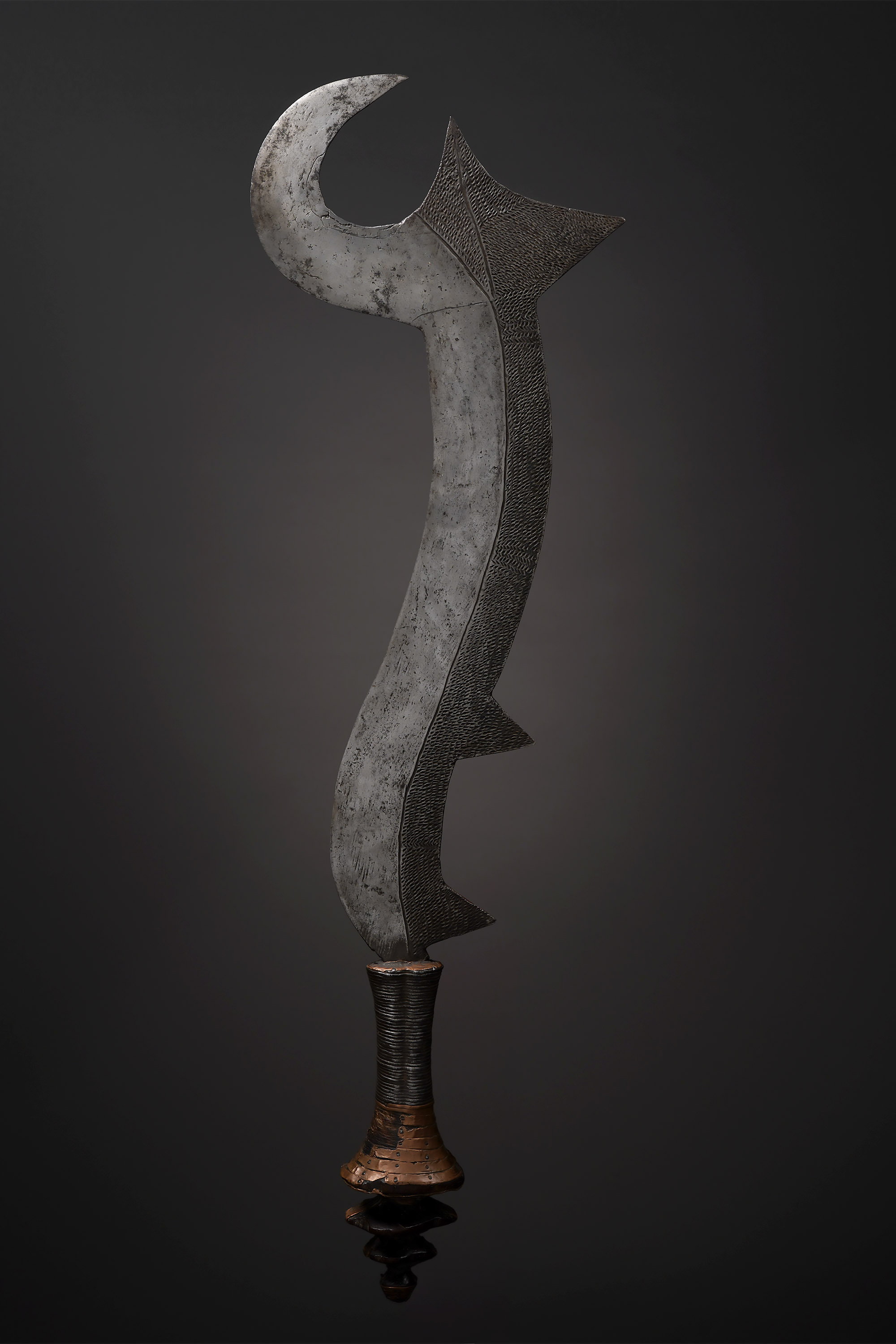
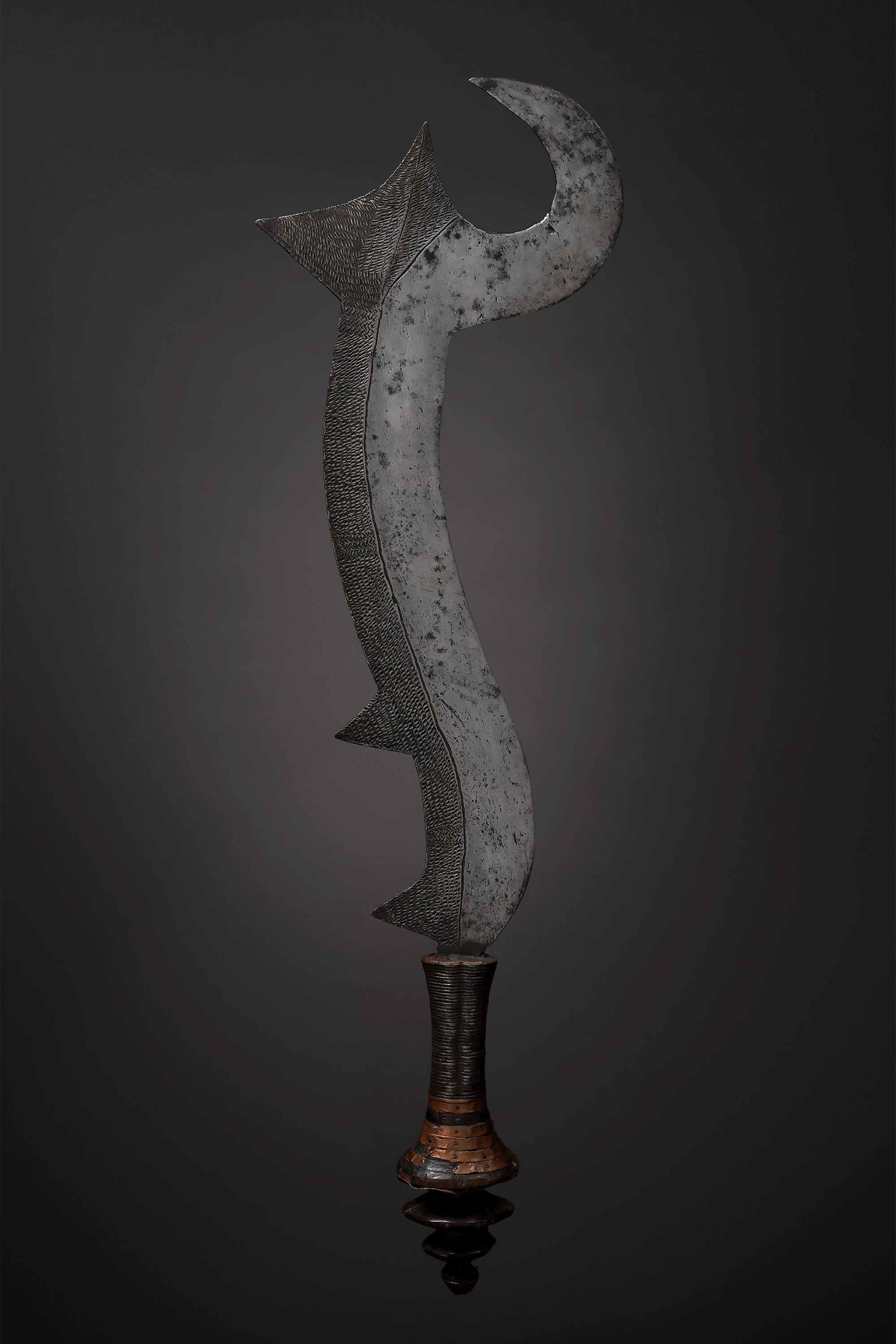
Ceremonial Sword
Lia / Sengele / Ntomba, D.R. Congo
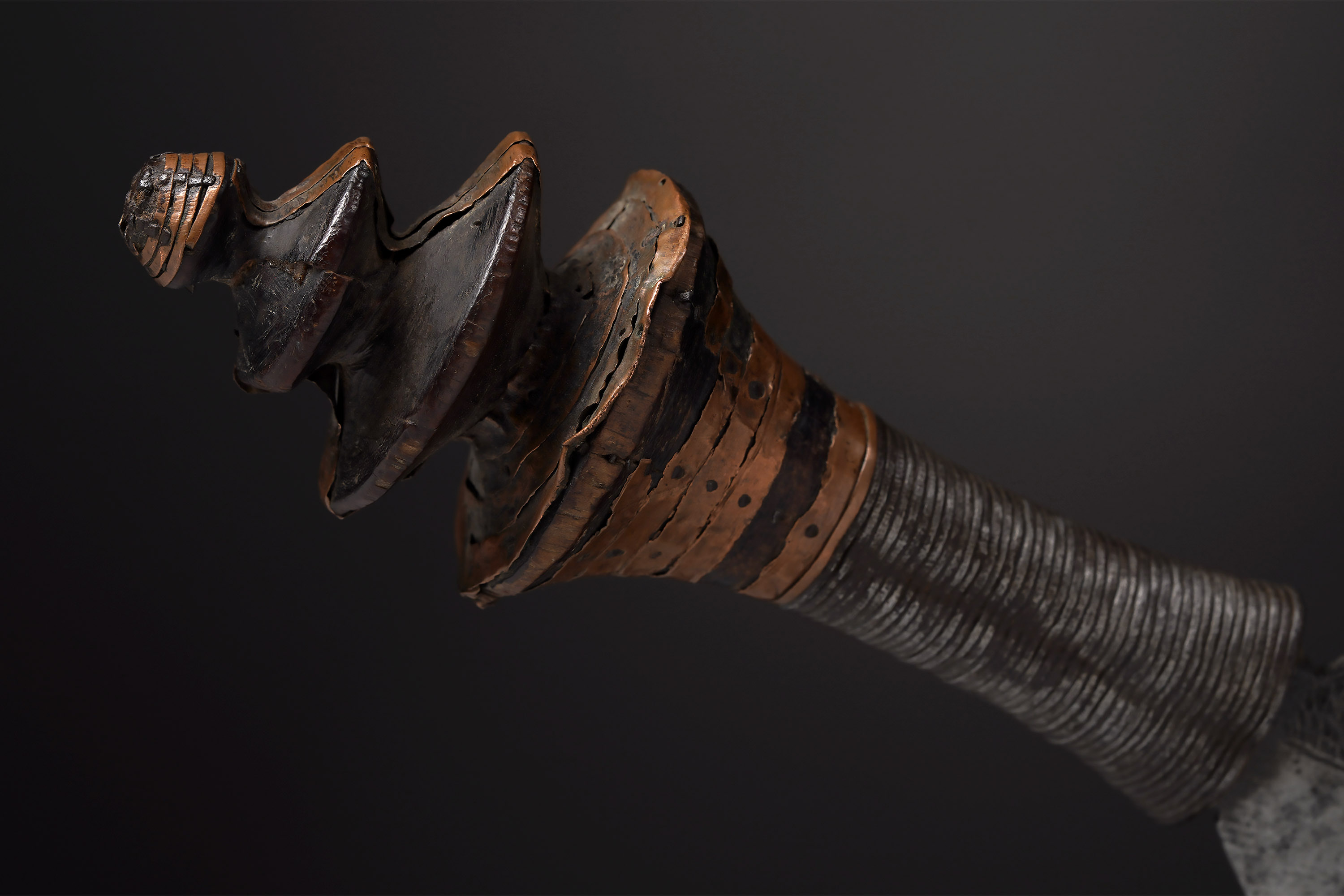
Iron, wood, copper
Early 20th century
With its cutting edge on the outside curve, this knife relates to the ngulu, from which its basic form is most certainly derived. The ngulu was made by a number of Central African cultures, particularly those who lived between the Ubangi and Congo Rivers.
As various groups adopted the blade, whether for functional purposes or as potent signifiers of rank and power, blacksmiths made numerous adjustments to the general shape and varied the style of ornamentation. This type is typical of the Lia, a subgroup of the Mongo people, who live west of the Congo River near the equator.
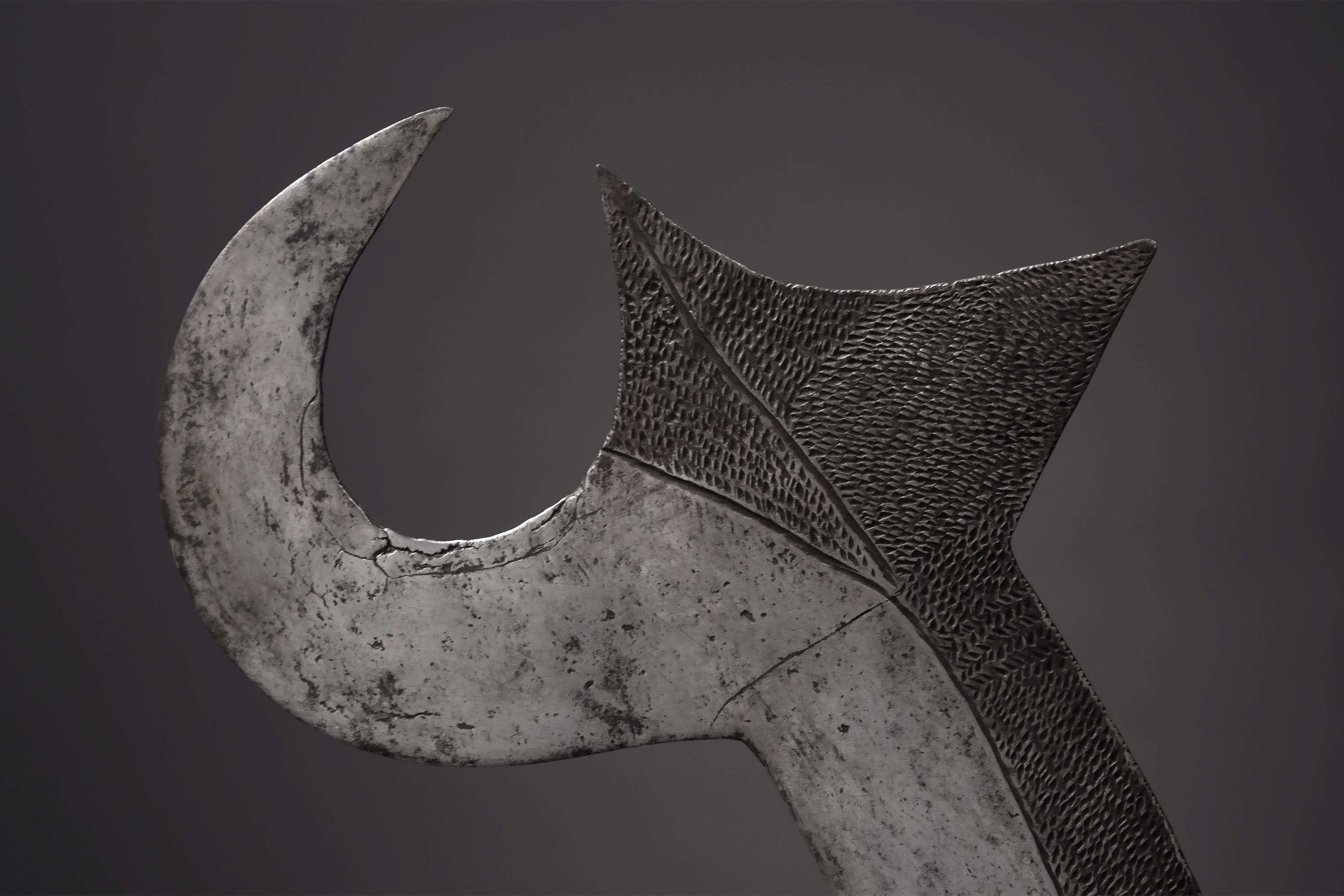
In ornamenting the blade, the Lia often preferred a densely textured band of stippled incisions as opposed to the elaborate yokes of parallel hatching, herringbone scoring, or short diagonal hatching commonly found on the ngulu blades. This textured effect is achieved by striking a pointed tool repeatedly into the metal (Berardi, Standing On Ceremony, 2004).
20 in :: 51 cm
InventoryID #13-2916
SOLD