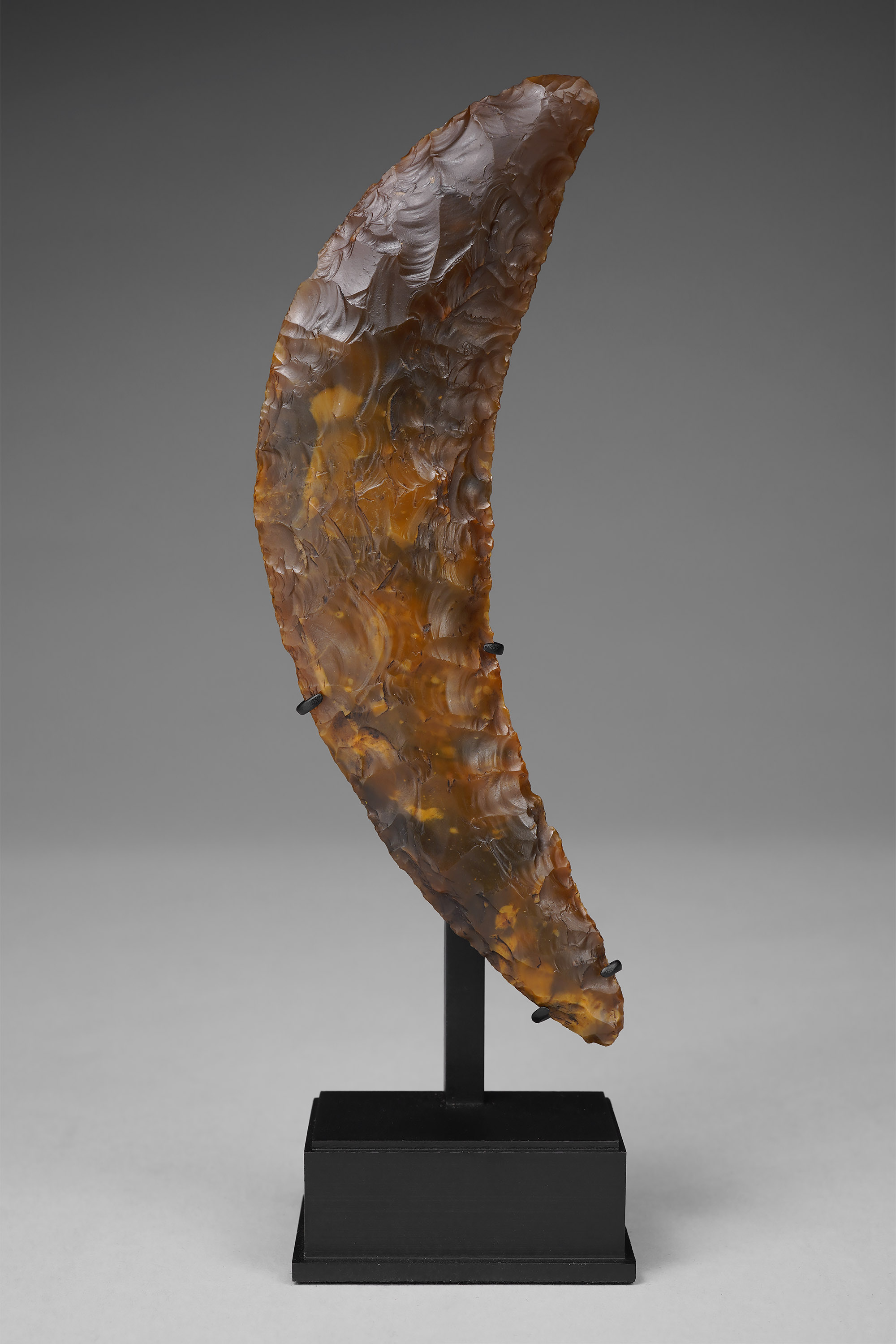
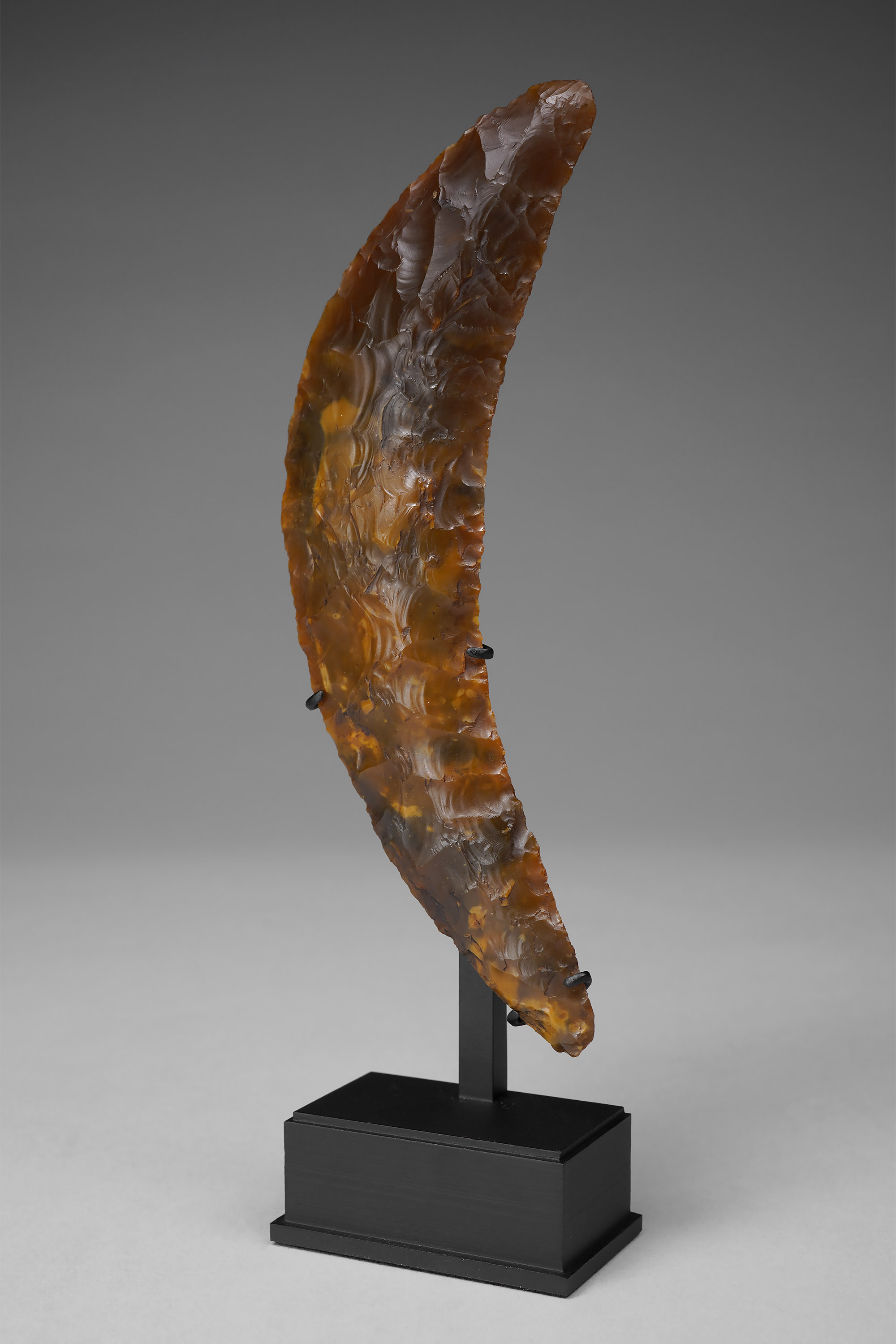
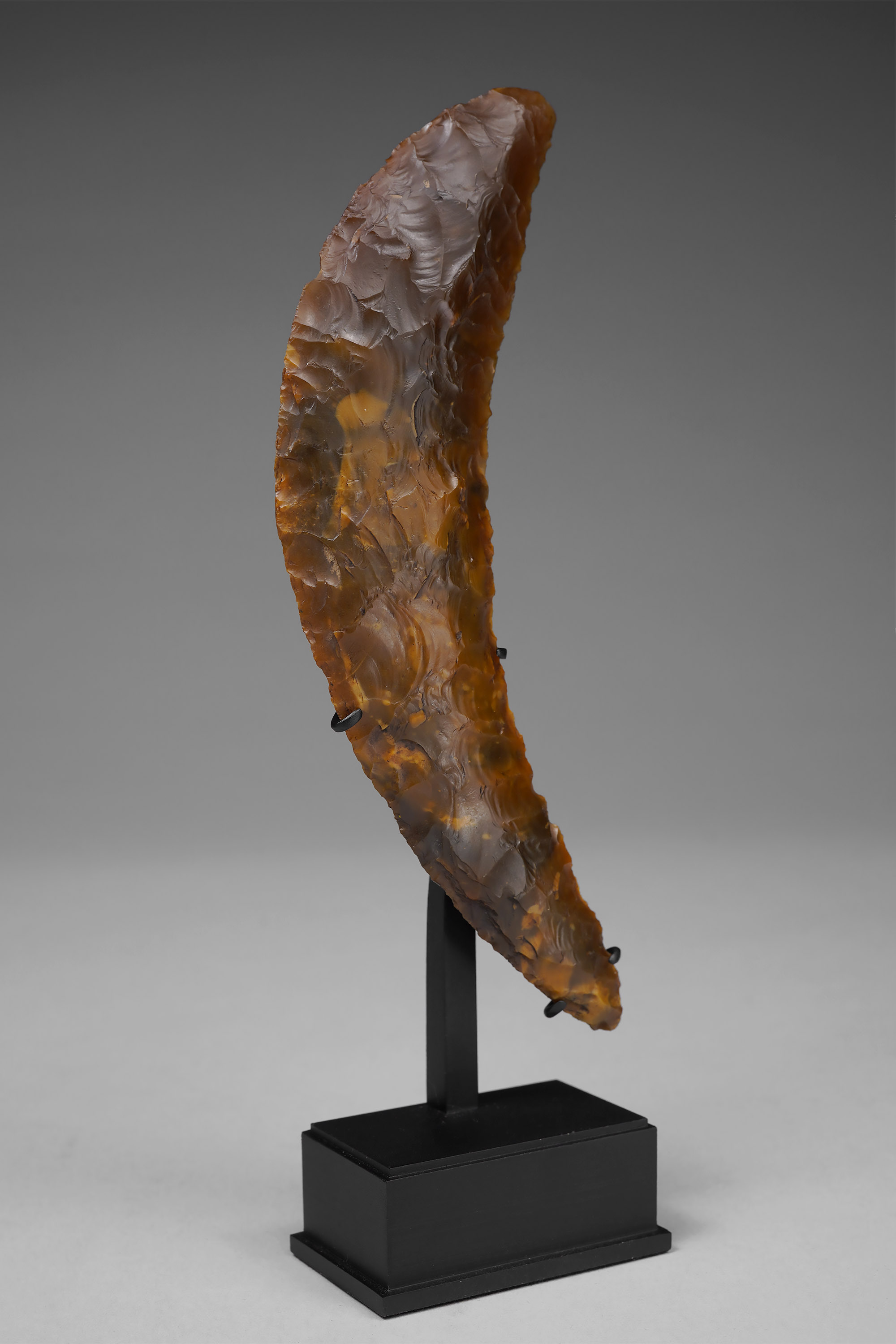
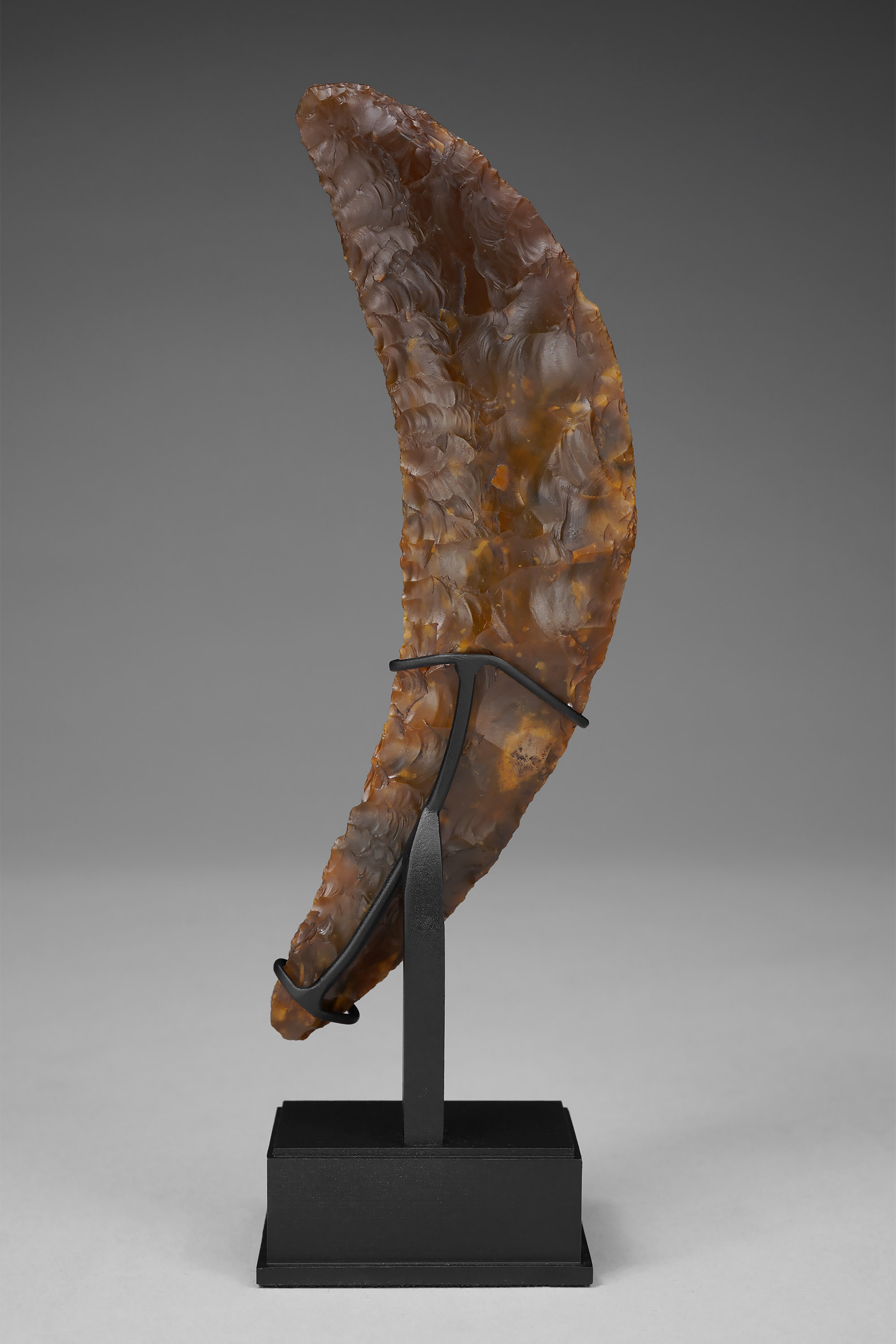
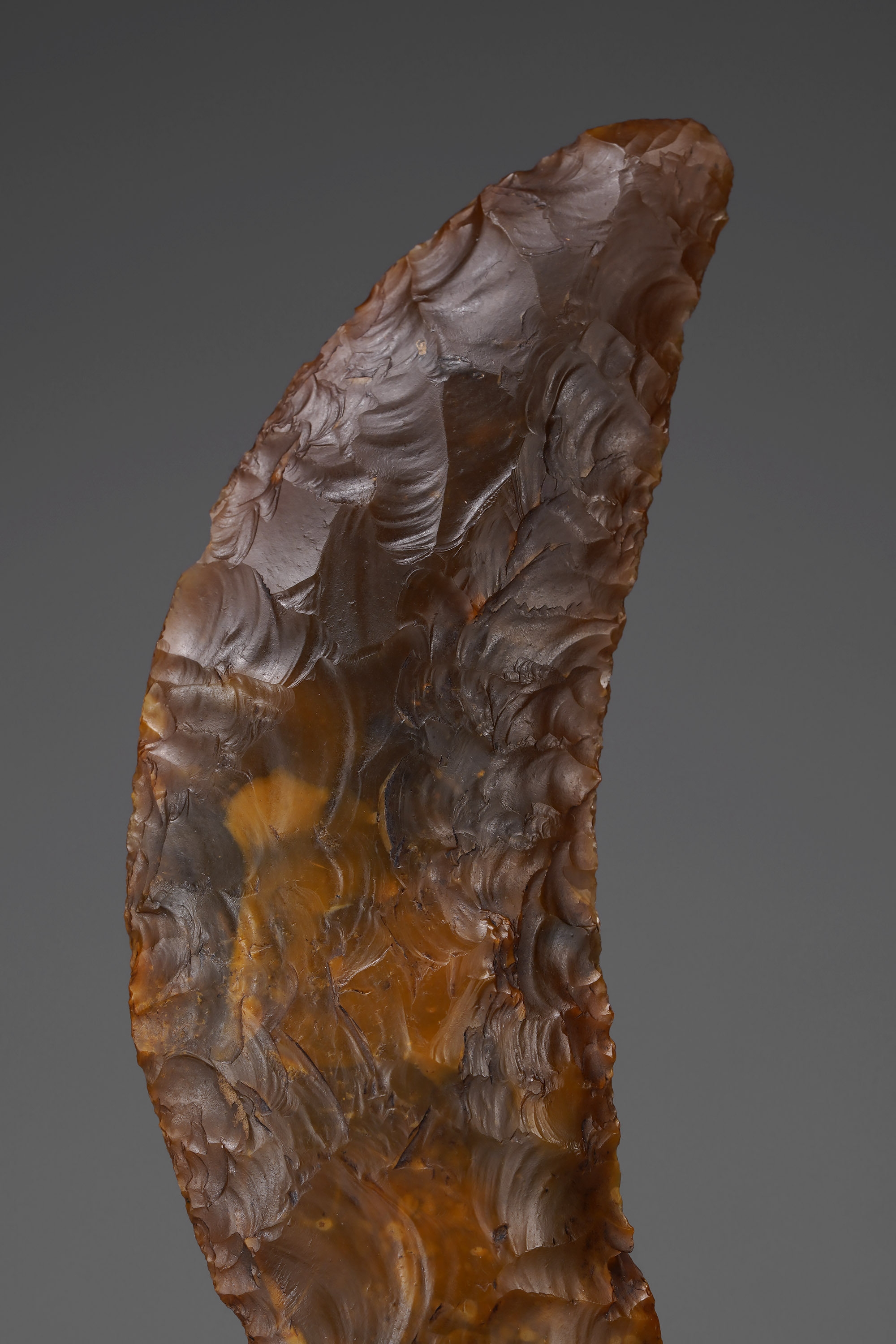
Sickle-Shaped Blade
Neolithic Period, Denmark
Flint Stone
2500 – 1200 BC
This bifacially worked sickle-shaped blade has a lunate shape and appeared from the late Neolithic Period to the beginning of the Bronze Age (2500 – 1200 BCE). They were developed in Northern Jutland and then spread over southern Scandinavia, often based on bronze examples from southern regions in Europe. Placed in a wooden or antler handle and fixed with resin or tar from a bark tree, they were used to harvest grains. They are a key marker of the "dagger period" in Denmark, indicating intensive agriculture and a stable agrarian society. After intensive use, these sickle blades developed what is known as a ‘sickle sheen.’ In many cases, they were reworked and re-sharpened through pressure retouching (Van den Dries, Michel, Stone Age Artefacts from Northern Europe, 2026).
Weight: 66g
5.75 in :: 14.5 cm
InventoryID #13-2962
Not For Sale